Nobody can defend democracy more effectively – or undermine it more profoundly – than conservatives
The confrontation with the right-wing authoritarians has only just begun, and the Union already looks curiously powerless. Nonetheless, CDU and CSU have what it takes to go on the offensive.
Guest Contribution by Roger de Weck
In such times of destabilisation, more and more people are looking for something to hold on to. When the world is in turmoil, stability is progress. But in such tumultuous times, who actually stands for stability, continuity, and moderation? In principle, one of the core strengths of broad-based Christian democratic parties is their ability to strike a balance, reconcile competing interests, and keep society more or less on an even keel. They have always understood this as part of their role.
Christian Democrats, Christian Social politicians, and moderate conservatives can make a vital contribution to the resilience of society in the midst of upheaval. Assuming, of course, that parties on the centre-right stay on the centre-right: that conservatives remain conservative.
After all, it is not uncommon to find them giving in to temptation and taking their cues from successful right-wing authoritarians who favour radicalism over stability.
Destabilisation is the core strength of such reactionaries. They want to move backwards to go forwards, and into an authoritarian future. Their goal is to disrupt democracy itself. In so doing, they see neither the Social Democrats nor the Greens as their main adversary. The type they go for is always the same: the centre-right.
From the post-war period well into the 21st century, conservatism was a force for stability in many countries. But can the same really be said of it at this historic turning point?
The Christian Democrats here in Germany are the most successful iteration of European conservatism, because despite their staunchly conservative impulses, they are not uniformly conservative. Time and again, they have shown themselves capable of resisting the urge to lurch away from the centre and much further to the right.
Moderate conservatives in general – and Christian Democrats in particular – now bear a dual responsibility. They are the political force best placed to challenge the authoritarian right, yet also the one most susceptible to its destabilising influence. It all comes down to the conservatives. Nobody can defend democracy more effectively – or undermine it more profoundly – than they can.
Without centre-right or staunchly conservative representation of those sections of society most resistant to change, democracy will not endure. Indeed, liberal democracy can also be understood as a form of “conservative democracy” – because what matters now is preserving democratic institutions. This is progress through conservatism, forward-looking stabilisation.
It would certainly do conservatism no harm to come up with its own proposal for the future rather than constantly warning us that extremism will rob us of one. Even those conservatives that consider themselves pragmatists need guiding principles or even – dare I say – a vision, as abhorrent as such an ambitious word may sound to conservative ears.
Conservatives, after all, consider it conservative not to define conservatism more precisely. But that tried and tested pragmatism no longer cuts it. Fumbling blindly forward in the absence of any clear strategy is unlikely to see off the challenge posed by reactionary politics. Opportunism, however, sometimes conceals little more than a weak hand. The campaign waged by right-wing authoritarianism against European conservatism and its historical achievements should give us cause for consideration.
That enemies of open society keep emerging has been a constant throughout history, a regrettable reality. The real danger, however, is when ever more supporters of open society are led astray: when, paradoxically, they seek to defend open society by respectfully imitating and normalising the presence of their enemies, basically paving the way for them.
The confrontation with Europe’s right-wing authoritarians and their patrons – Russia, China, the USA – is likely to put democracy to the test for years to come. Yet nothing has been set in stone; history has yet to be written. And while history is well-acquainted with path dependencies, it is no stranger to sudden turns. Those who see lasting developments in passing trends risk making a grave error of judgement.
At the beginning of the 1990s, the renowned US political scientist, Francis Fukuyama, was under the illusion that democracy had won a definitive victory, as though history had come to a standstill, and we would all live happily ever after. Today, by contrast, many have lost heart and believe that the advance of the authoritarian right is unstoppable, as if it were the end of history all over again. But the confrontation with reactionary movements has only just begun.
The beleaguered CDU and CSU could go on the offensive more quickly than one might think. That’s if they can manage to frame their policies correctly, bring them under a single banner, or – to put it more fashionably – if they can develop a narrative. For example: the question now is whether our children and grandchildren will live on an autonomous, confident, and proud continent – or merely on one that China, Russia, the United States, and the tech platforms can bully, coerce and humiliate as they see fit. That’s what we call European sovereignty. Viewed through this lens, every reform, every fiscal and tax policy, every social and environmental measure already begins to look a little different.
All Christian democracy needs is the will. And nobody else can do the willing for it.
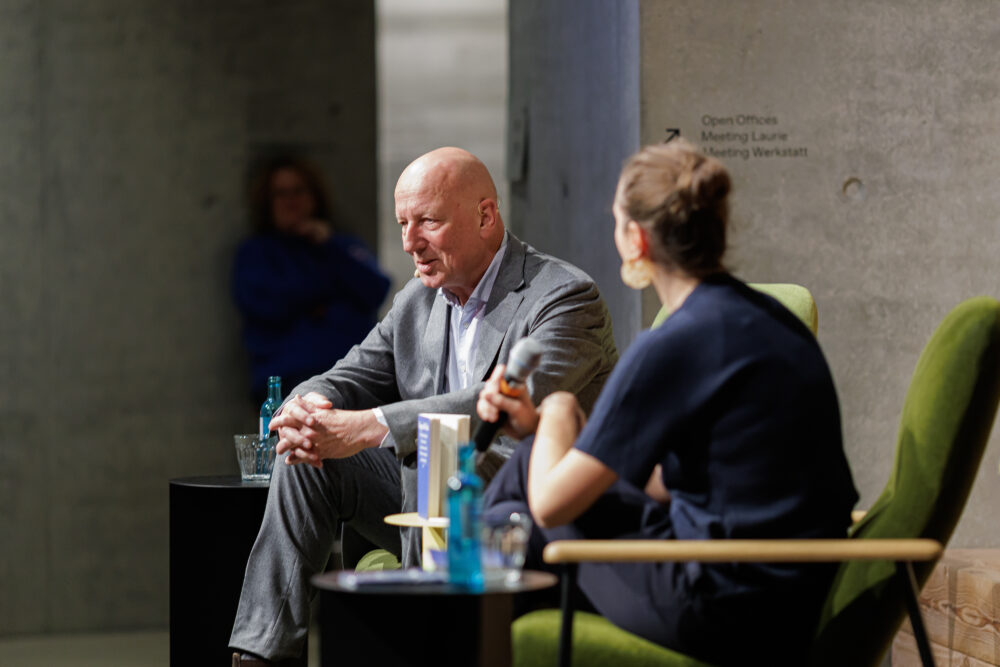
Roger de Weck is a visiting professor at the College of Europe in Bruges and president of the Jean Monnet Foundation for Europe. He previously served as editor-in-chief of DIE ZEIT and director-general of Swiss Radio and Television, and presented Sternstunden der Philosophie. This article is based on his new book, Glanz und Elend der Konservativen (The Glory and Misery of Conservatives), which he will present at Publix on 27 October (Suhrkamp Verlag, 184 pages, €20).