"AI should make our product more human" – Tav Klitgaard in conversation
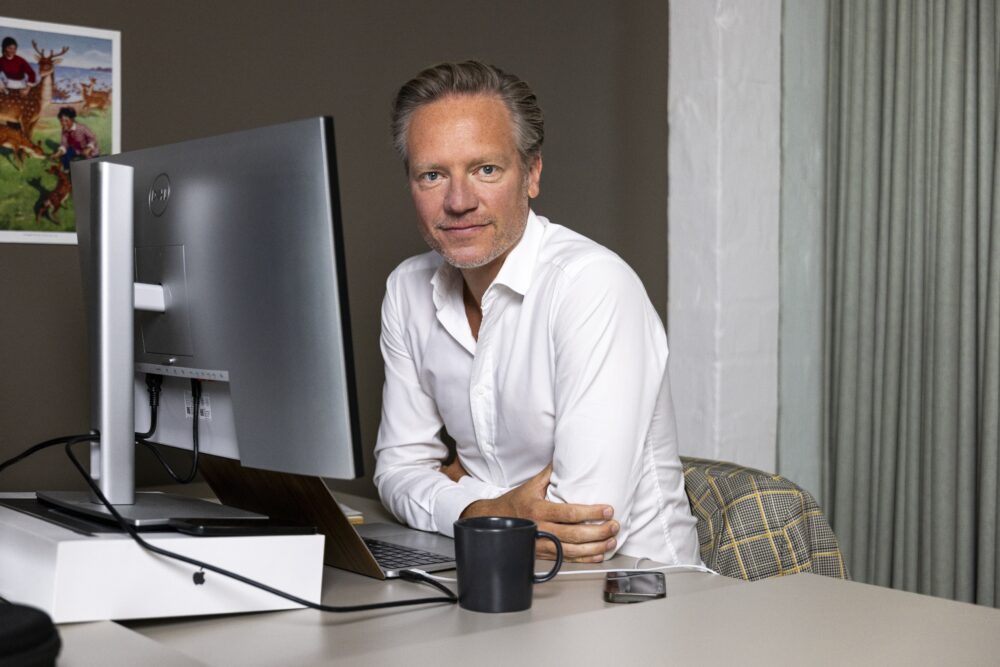
Tav Klitgaard is the CEO of Zetland. The Danish news platform is widely seen as a model for digital journalism in Europe: it publishes a handful of long stories each day, every one of them as text and as audio, and funds itself almost entirely through memberships. We are talking to him at the Publix Thursday "Why AI Won't Solve the Media Crisis: And What Newsrooms Stand to Gain If They Don't Rely on It". Ahead of the event, we asked him a few questions.
Zetland is often cited as a success story for a digital media company in Europe. How would you summarize the secret to your success?
We are laser focused on the actual user needs of a modern media consumer, and have no legacy business and mindmaps to worry about. We have focused on building a human product from the ground up. This means we prioritise a relation to the customer in everything we do from editorial over tone-of-voice and marketing to digital product development.
How do you use AI in your day-to-day editorial work at Zetland, and how has it changed the way you work?
As a general ground rule, we use it as much as possible where it will make our product more human. This goes for AI as it does for anything we do. Concretely on the editorial team this means productivity purposes and increasingly creative sparring and versioning. Examples are transcribing, managing schedules and coordinating sources and delivery plans, internal communication, shadow-editor, and drafts for text-versions. The topic of our Publix Thursday is “Why AI Won’t Solve the Media Crisis.”
In your view, where is AI currently being seen as a solution to a problem that actually requires different approaches?
There many other types of journalism and business models than ours, and I am sure people using AI in very different ways have their reasons to do so, so I am not judging anyone. But for us, AI should not be used to increase speed and volume of the journalism. Instead what journalism needs is to differentiate itself from other information sources. Our take is to learn from news creators and aural storytelling traditions to become even more personable. This also means scarce rather than abundant.
How will we stay informed in the future?
I hope and believe that trust will play a bigger and bigger role as more people realise that being critical in the sources you choose, is paramount. Professional mediators such as journalists will be premium if we manage to build personal and organisational brands. I also believe regulation will and should play a role in helping citizens navigate who and what to trust. We spend a lot of time wondering what AI can do, and less often, where we really want to go with it. What is your vision?
My compass is that we are selling trust, and that trust is currently moving from institutions towards individuals/humans. My ideal scenario is one where we have realised - to a larger extent - the value of homo sapiens within relations, taste, and creativity, and where "the machine" lets us be able to express it. I genuinely believe in the value of humanity, even though I usually have a hard time describing what it means. And I also believe "the machine" can help us realise this intrinsic value.
On my darker days I wonder what happens when the machine feels more human than humans do. On those days I turn to Hartmut Rosa, who will tell me that any feeling of resonance with an LLM is a mirage, and that there is [something] in human connection that can never be fully mediated. I still believe him.